Industrial automation · Custom machines
Custom machine design and build for your production line
A custom machine is built for one job on your line. We take it from a description of your process to a machine running in your plant: mechanics, controls, machine vision, the operator interface and documentation.
Founded in Israel in 2015; designs and builds custom machines, with extensive experience servicing aluminium and food plants
- For
- Plant, operations and engineering managers with a manual station or a bottleneck on the line
- You get
- A machine designed, built and tested, with electrical drawings, control software, documentation and training
- First step
- Send a description of the process; an engineer calls back and arranges a site visit
When it fits
When is a custom machine worth building?
Four signs a custom machine will pay off. And sometimes a standard machine is the better buy: if one on the market already does the job as it is, we'll tell you on the first call.
Volumes grew, and the manual station can't keep up
The whole line waits on one station, or you add shifts to meet orders. A custom machine does the same operation at a steady rate, shift after shift.
Quality depends on who's at the station
Dimensions, clamping force or position vary between people and shifts. A machine repeats the same operation exactly, and can measure and record every part.
Heavy, repetitive or awkward work
Lifting, the same motion over and over through the shift, or work next to hot or sharp parts. The machine takes the hard part; the operator loads, supervises and handles exceptions.
The station is hard to staff and train for
It takes long training and turnover is high. A machine with a simple operator interface shortens training and frees experienced people for other work.
Machine specification
How do you write a URS for a machine?
A user requirements specification (URS) defines what the machine must do and how it will be tested. Start with this list; even a partial draft is enough for a first call. We write the full document with you during scoping.
The process and the part
Throughput and volume
Quality criteria
The operator and the work around the machine
Site conditions
Interfaces to the line and your systems
Safety and standards
Acceptance, documentation and spares
Project phases
Project phases, from assessment to a running machine
Six phases, each ending in a deliverable you approve before we continue. The machine is tested at our workshop before shipping, and again at your plant before handover. Each phase's duration is estimated after the initial evaluation.
01 · URS
Station assessment
We visit the plant, watch the station at work, measure the rate and check the parts. Together we define what the machine must do and within which constraints.
Output: User requirements (URS) and a list of constraints
Gate: You approve the requirements
02
Concept and ROI
An initial machine layout, technology choices and trials on real parts where needed. Alongside the concept: an estimate of the savings against the project cost.
Output: Concept layout, ROI estimate, risk list and proposal
Gate: You decide whether to go ahead with detailed design
03
Detailed design
Mechanical design, electrical schematics and the control panel, software architecture and the operator interface. A full BOM and drawings for the machined parts.
Output: Drawings, electrical schematics, BOM and software architecture
Gate: A joint design review before parts are ordered
04 · FAT
Build and FAT
Machined parts and harnesses come from the manufacturers we work with. We assemble, wire, write the control software and run a factory acceptance test against a protocol you approved.
Output: FAT protocol and results
Gate: The machine passes the FAT
05 · SAT
Installation and SAT
We install around your shifts or during a planned shutdown, run the site acceptance test and train your operators and maintenance staff.
Output: SAT results, training and the machine file
Gate: You sign off on the machine
06
Service and support
Service on call-out or under a service plan, with a technical log for the machine. Later changes and upgrades build on the documentation handed over to you.
Output: Technical log and service plan
Design and build
Machine, controls and vision from one engineering company
Whoever designs the machine also designs its controls, operator interface and camera check. There's no gap between a mechanical contractor and an electrical one, and you have one point of contact.
Each project brings in specialist engineers for what the machine needs: mechanical design, electrical and controls, motion control, machine vision and software. A lead engineer runs the project from scoping to handover and stays your point of contact after start-up.
- Mechanical design in Fusion 360, or in SolidWorks or Inventor if your plant works in them, on an aluminium-extrusion or custom frame.
- Controls on Siemens, LS Electric, Unitronics or Controllino PLCs, with EtherCAT motion control when the machine needs synchronised axes. Motion control and PLC programming
- Machine vision that checks every part inside the machine. Machine vision for quality control
- A test station at the end of the machine when every unit needs a functional test. Automated test stations
Machined parts and harnesses are made by the manufacturers we work with, including local manufacturers in Israel for urgent and sensitive work. Assembly, wiring, control software and testing stay our responsibility.
From our projects
Machines Conceptech has designed and built
Conceptech has designed and built custom machines for production lines, from the mechanics to the controls, alongside servicing existing machines.
- An automatic balloon-printing machine.
- A machine that fills containers and fits their caps.
- Labelling of packages on a moving conveyor.
For each one we designed both the machine and its controls. We're happy to share more about these projects on a call, within our clients' confidentiality.
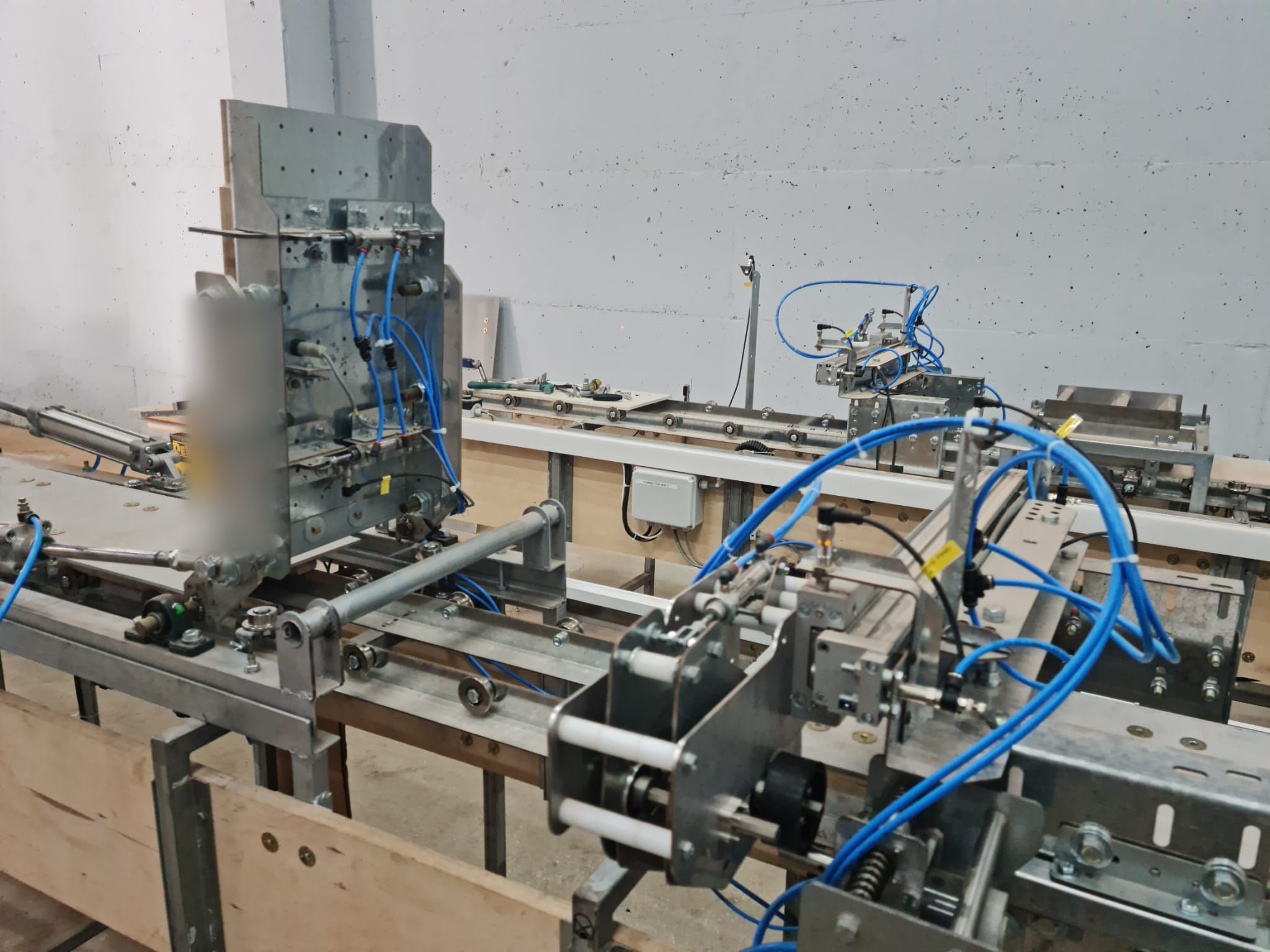
From our projects
What does a delivered automation project look like?
Full automation for a building-products plant
From control design and panel assembly to sensors, actuation, and testing and commissioning on site.
Custom machines: FAQ
What drives the cost of a custom machine?
Mainly the amount of mechanics, the number of axes and sensors, the checks the machine performs, and the documentation and compliance requirements. That's why the cost is set in a written proposal after scoping, not before.
To find out whether the project pays off, the concept phase includes an ROI estimate: what the station costs you today in labour, rejects and delays, against the cost of the machine. If the return doesn't justify a machine, you'll hear it at that point.
How long does it take to design and build a custom machine?
The schedule is set after scoping, because it depends on the design scope, lead times for parts and components, and when the machine can be installed on your line. The proposal for the design phase includes a schedule for each phase, with approval points where you decide whether to continue.
What documentation comes with the machine?
A complete machine file: mechanical drawings, electrical and control-panel schematics, a parts list with sources, the PLC program as delivered, operating and maintenance instructions, and the acceptance-test protocols and results. Your maintenance team, or any other engineer, can then look after the machine for years. File ownership is agreed in the contract for each project.
How do you plan for spare parts?
From the design stage we choose common commercial components, such as PLCs, motors, sensors and pneumatics, and avoid one-off parts where we can. At handover you get a recommended spares list: what wears, what to keep in stock and where to order it. Machined parts can be remade from the drawings in the machine file.
Who services the machine after handover?
We do. After training, your maintenance team handles routine faults, and for everything else there's call-out service or a service plan, with priority on service calls and a technical log for the machine. We usually reply within 3 working hours, by email or phone.
Send us a description of the process, and we'll suggest a direction
Tell us what the station does today, at what rate and what's in the way. A photo or short video helps. An engineer will reply with questions and a proposed next step.
Usually a reply within 3 working hours, by email or phone