

Engineering company · Israel

Engineering for hardware products, factory automation and AI agents

Conceptech Engineering develops hardware products from prototype to production, builds and services factory automation, and implements AI agents in your systems. For startups, manufacturers and businesses in Israel and abroad.

Clients we've worked with

Services

What are you building?

Three service lines for three kinds of clients: startups and hardware companies, factories and industrial companies, and businesses adopting AI.

  • 01

    Hardware product development

    From an idea or first prototype to a product that works, is ready for certification and can be built repeatably.

    • Electronics and PCB
    • Firmware and embedded
    • DFM and certification
  • 02

    Industrial automation

    Stations, machines and automated tests that replace manual work on the line, plus service for machines already in place.

    • Custom machines
    • Machine vision
    • Service and maintenance
  • 03

    AI agent implementation

    An agent that runs one defined process inside your systems, with human approval. You start with a Discovery of one process.

    • Start with a Discovery
    • Systems and documents
    • Human oversight

From our projects

Which projects can you see?

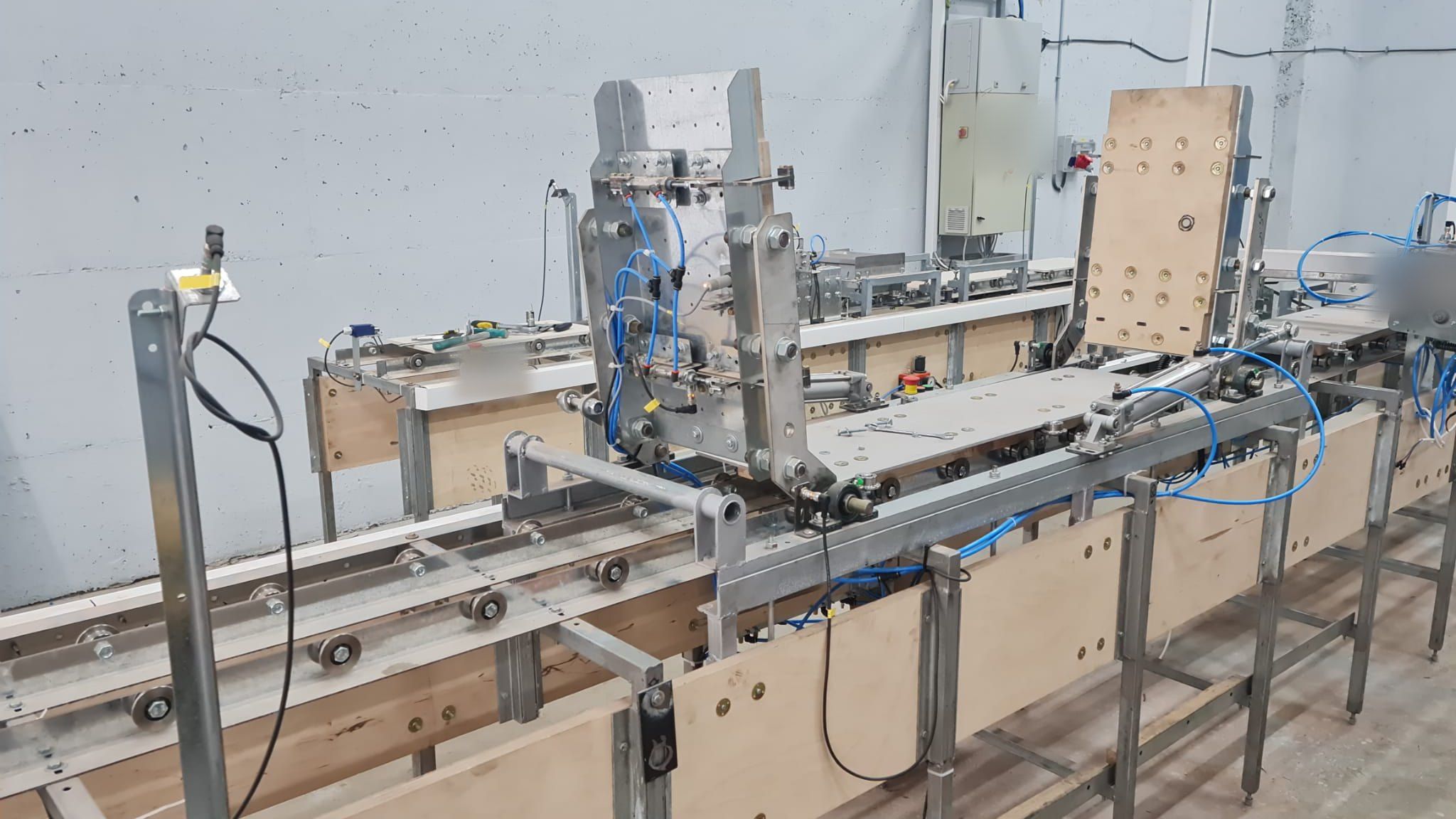
  • Pneumatic stations on the conveyor line at the client's plant, with air lines and sensors, and the control cabinet in the background.

    Full automation for a building-products plant

    We joined mid-build and delivered the entire automation, from conveyor and motors to controls. In operation, with video.

  • Illustrative schematic, not a photo: an automated saw line with an infeed conveyor and feeder, a clamped saw, an outfeed conveyor and a stacking bin, run from a control cabinet. HMI PLC L 01 02 03 04

    Automated saw lines back in operation

    Many lines at an aluminium plant had no documentation or vendor support. Back in operation in under one business day.

Industries

Which industries do we work with?

Our experience comes from the plant floor, research labs and startups. These are the sectors we have actually worked in.

  • Building-products manufacturing

    Full automation for a production line, from the conveyor and motors to the controls, delivered and in operation.

    See the full project
  • Aluminium plants

    Service and maintenance for production-line machines, including machines from other builders, from fault-finding to upgrades.

    See the saw-line project
  • Food and beverage plants

    Service and maintenance for machines at edible-oil, salad and soft-drink plants, including machines another builder supplied.

  • Startups and hardware companies

    Working prototypes and electronic product development, from proof of concept to manufacturing and certification readiness.

  • Academic and industrial R&D

    Early-stage hardware and engineering prototypes for research teams that need a system that really works, not just a demo.

Service and maintenance

Do you service machines you didn't build?

Yes. Conceptech services third-party machines and equipment, with extensive experience in aluminium plants and in food and beverage plants: edible oils, salads and soft drinks.

  • Fault-finding and repair, on call-out
  • Preventive maintenance, to cut unplanned downtime
  • Controls, drives and operator-interface upgrades for older machines
  • A technical log for every system we look after

Get in touch by email or phone, and we usually reply within 3 working hours. Machine service and maintenance

For plants we also build custom machines and test stations, and implement AI agents in production processes. More on engineering for manufacturers.

Process

How does a project with Conceptech work?

The same process across all three service lines: five phases, a defined deliverable at the end of each, and nothing moves on until you approve it. We estimate each phase's duration after the initial evaluation.

  1. 01

    Call and initial evaluation

    We learn what you're building or improving, what already exists, the constraints and what success looks like. A call with an engineer, then an initial evaluation and short scoping.

    Output: Requirements, risk list and a proposal for the next phase

    Gate: You approve the proposal before design starts

  2. 02

    Design and architecture

    We choose an approach and design it: electronics and mechanics, controls and software, or the agent and its connections to your systems. The biggest risks are tested here.

    Output: Drawings, models and an architecture document

    Gate: Joint design review and your sign-off

  3. 03

    Prototype, station or first agent

    We build a first version that works: a board and enclosure, a station on the bench, or an agent running on real data in a limited environment.

    Output: Working units or an agent in shadow mode, with code and docs

    Gate: It works against the requirements set in scoping

  4. 04

    Validation and testing

    We test what was built against the requirements: functional and stress tests, acceptance tests, or evaluating the agent on an agreed test set.

    Output: Test report and a list of fixes

    Gate: Results meet the targets we agreed on

  5. 05

    Production, rollout and support

    We hand over to manufacturing, install on site or extend the agent to daily use, and stay available for support and improvements.

    Output: Manufacturing pack, documentation and training, or an operating plan

    Gate: A clean handover and your acceptance sign-off

Project team

Who works on your project?

For each project we bring in specialist engineers in exactly the disciplines it needs. One lead engineer is technically accountable for the project and stays your point of contact.

  • PCB layout

    Board layout, routing, stack-up and grounding, with fabrication files ready to order.

    • DipTrace
    • Altium
    • OrCAD
  • Electronics

    Electrical architecture, schematics, component selection, protection and power supplies.

  • Firmware and embedded

    Code for microcontrollers and embedded Linux, drivers, real-time behaviour and automated tests.

  • Mechanical design

    Enclosures, mechanisms and machine frames, designed for the way they will be made.

    • Fusion 360
    • SolidWorks
    • Inventor
  • PLC and automation

    PLC programming, motion control, industrial networks, electrical panels and operator interfaces, including on existing machines.

    • Siemens
    • LS Electric
    • Unitronics
    • Controllino
  • Machine vision

    Cameras, lighting and software for inspection, measurement and recognition on the line, from classic vision to object detection, vision-language models and tracking.

    • OpenCV
    • YOLO
    • VLM
  • Software and AI

    Application software, integration with business systems, AI agents on cloud or on-premise models, testing and monitoring.

    • Python
    • Dify
    • LangGraph
    • Hermes Agent
  • Manufacturing preparation

    Manufacturing packs, design-for-manufacture changes, and coordination with the manufacturers we work with, including local manufacturers in Israel for urgent and sensitive work.

Projects are led by an engineer with 10+ years of experience across robotics, automotive and smart mobility.

Engagement models

How can we work together?

Start with a small, defined phase and commit to one phase at a time. Each model has a clear scope and clear deliverables, and timing is estimated after the initial evaluation.

01

Scoping phase

Best when: You have an idea, a line problem or a process, but it isn't clear yet what to build.

Scope

  • Working sessions and a review of what exists: documents, drawings, the line or systems
  • Requirements and measurable targets
  • Technical options and the main risks
  • A plan for the next phase

Deliverables

  • Requirements and initial architecture doc
  • Risk list
  • Written proposal for the next phase

02

Build phase

Best when: Requirements are clear and you want a prototype, an installed system or a working agent.

Scope

  • Detailed design: electronics, mechanics, controls and software
  • Building a prototype, a station or an agent in shadow mode
  • Testing against the agreed requirements
  • Design reviews at checkpoints agreed up front

Deliverables

  • Source files and drawings
  • Working units or system
  • Test report
  • Documentation and training

03

Service and ongoing support

Best when: You have a system, machine or product in the field and need maintenance, upgrades or engineering help.

Scope

  • Preventive maintenance and troubleshooting, including third-party machines
  • Improvements and extensions to an existing system
  • Firmware and software updates
  • A record of every intervention

Deliverables

  • Technical log per system
  • Periodic report

Frequently asked questions

What does Conceptech Engineering do?

Conceptech Engineering is an Israeli engineering company that develops electronic products and prototypes, builds and services industrial automation, and implements AI agents. The company was founded in 2015, and for each project we bring in specialist engineers in the disciplines it needs.

Who works on my project?

A Conceptech lead engineer runs every project from the first call to handover and stays your technical point of contact. Specialist engineers join only in the disciplines the project needs: for example PCB design, firmware, mechanics, controls or software.

About Conceptech and how we work

How do we start, and what happens after the first contact?

You start by getting in touch by email, phone or the contact form, and a call with an engineer about what you're building or need to improve. We usually reply within 3 working hours. If there's a fit, we run an initial evaluation and short scoping, and you get a written proposal for the first phase with a defined scope and deliverables.

Each phase ends with a deliverable and a decision on whether to continue, so you commit to one phase at a time. How it works in product development

How long does a project take?

Project length depends on scope: how many boards, machines or systems are involved, how mature the spec is, and which tests and approvals are needed. That's why we estimate the project and each phase after the initial evaluation, not before, and the estimate appears in the proposal for each phase alongside the scope and deliverables.

Do you sign an NDA?

Yes. We sign an NDA on request when the project calls for it. That's common in product development and research work, where you need to share an idea, drawings or code. Not every job needs one: a simple wiring job at a plant, for example, doesn't.

Who owns the design files and IP?

Ownership of design files, code and IP is agreed in the contract for each project, before work starts. That way it's settled and documented before the first phase, and you know up front what you receive at the end of each phase.

Do you work with companies outside Israel?

Yes. We work with founders and companies abroad through remote collaboration, with English-speaking engineering throughout, and we welcome partnerships. Calls, documents and written communication can run in English, Hebrew or Russian for the whole project.

For hardware startups in Israel and abroad: hardware development for startups.

Tell us what you're building

Tell one of our engineers what you need and what already exists, and we'll come back with the sensible first step.

Usually a reply within 3 working hours, by email or phone

Talk to an engineerWhatsApp(opens in a new tab)