Service · Hardware products
Hardware product development, from prototype to production
Conceptech is a hardware product development company in Israel, working with startups and companies at home and abroad: electronics and PCB, firmware and mechanics, from working prototype to certification and production.
- You get
- Working units and a manufacturing pack, in phases you approve
- First step
- A call with an engineer, NDA on request, then a scoping proposal
Founded in 2015 · Designing for FCC and UL from the first schematic
- Enclosure and interfaceDisplay GUI, buttons, LEDs
- Safety-critical firmwareSafe OTA, MISRA C when required
- IP-rated sealDesign to MIL-STD when required
- EMC and FCC readinessEMC-aware shield design
- High-speed boardInterfaces like USB 3 and HDMI
Capabilities
What capabilities do we bring to hardware development?
Certification, high-speed boards, firmware that updates safely, sealed enclosures and safety-critical code: we plan for each of them from the requirements stage.
- Certification with our guidance: we guide your product through FCC, Israeli certification, environmental testing, the Israeli safety standard for outdoor electrical products and UL safety, and manage the work with the accredited lab.
- High-speed boards: we design boards with high-speed interfaces such as USB 3 and HDMI, alongside control of optical assemblies, DC and stepper motors and heating elements, and displays with physical buttons and indicator LEDs.
- Firmware that updates safely: we write BLE and Wi-Fi firmware with OTA updates through a resilient bootloader. If an update fails, the device falls back to the last version that worked.
- Sealed enclosures: we design for IP ratings and, when required, for MIL-STD, and manage the certification process with the labs for you.
- Safety-critical code: we work to MISRA C, SIL or ASIL guidelines when the product requires them, with a design derived from an FMECA.
These capabilities are led by an engineer with hands-on experience from earlier roles (about our lead engineer).
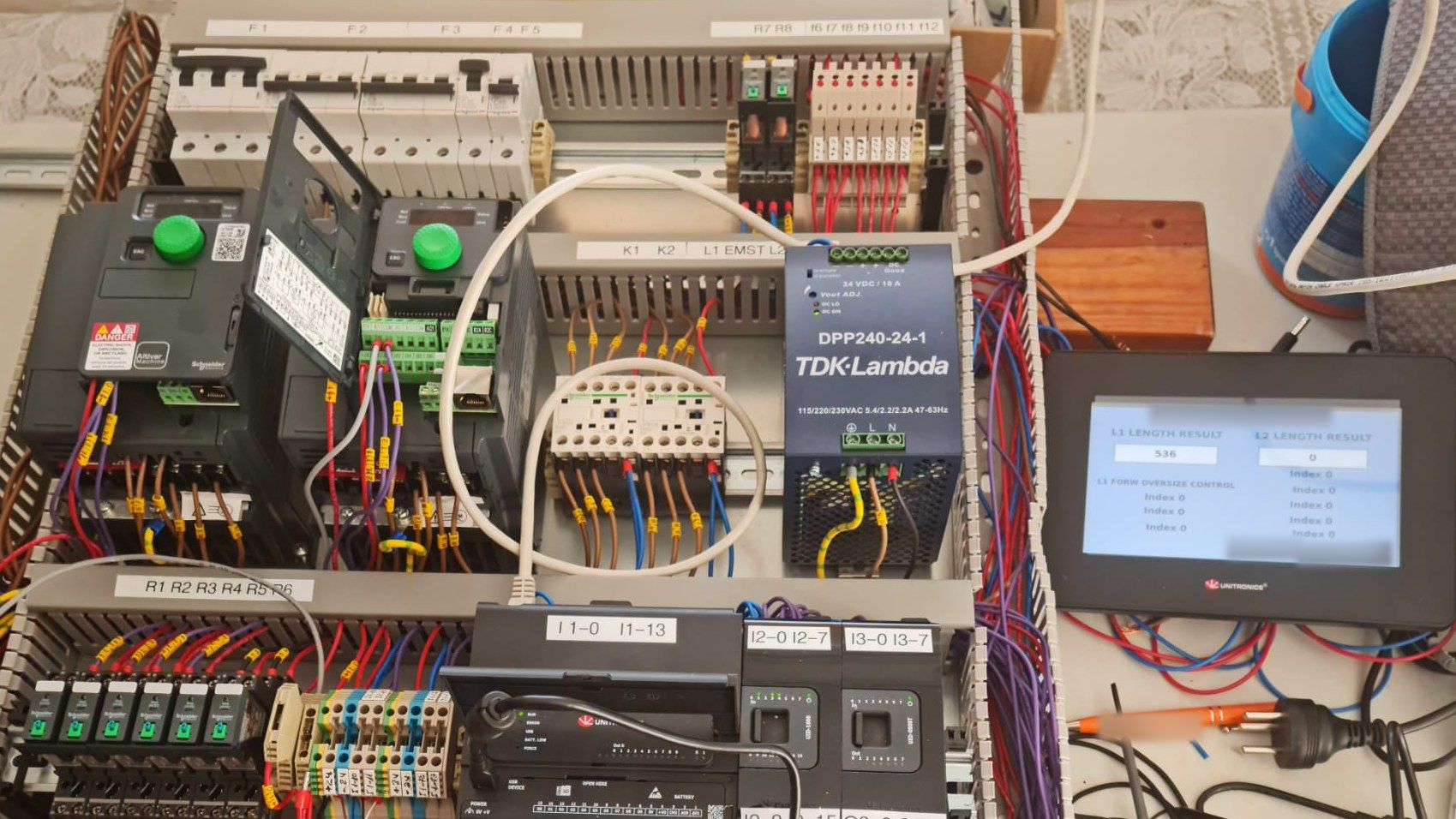
The same engineering works beyond products: we designed, assembled and delivered all the automation for a production line at an Israeli building-products manufacturer, from a control cabinet tested in our lab to installation and commissioning on site. See the full project
Product development services
What does hardware product development include?
Hardware product development takes an idea or early prototype to a product that works, passes certification and can be manufactured repeatably. Pick the service that fits your stage.
01
Engineering prototype development
Board, firmware and enclosure working together, with a bring-up and test report and a plan for the next revision.
02
PCB and electronics design
Schematic, component selection and board layout in DipTrace, Altium or OrCAD, with a complete manufacturing pack.
03
Firmware and embedded development
Firmware for microcontrollers, drivers and communications, with tests that can run automatically.
04
Mechanical design and enclosures
Enclosure, mechanisms and the fit with the board, mainly in Fusion 360, made by a method that suits the quantity.
05
DFM and small-batch production
DFM changes, a manufacturing pack and work with manufacturers, through to a first batch that passes the test procedure.
06
FCC, CE and UL readiness
Design for compliance from the first schematic, pre-compliance testing and a technical file for the accredited lab.
07
Electronics and embedded engineer for your team
When your team is missing one discipline: a lead engineer of ours joins, with specialists as needed.
08
What a hardware prototype costs
What makes up the cost, what drives it up or down, and how to get a written estimate for your project.
Who it's for
Who is this for?
Five situations where our electronics design and product development services fit best. If one of them sounds like you, it's worth a call.
A hardware startup heading for its first units
You have an idea or a proof of concept, and now you need a product that works in the field, with a design that holds up in the first batch.
A company adding electronics to an existing product
A mechanical or mature product needs sensors, connectivity or a controller, and there's no electronics and firmware team in house.
A research team that needs an engineering prototype
An academic or industrial R&D team needs a system that really works, not just a demo, to test an idea or to raise funding.
A prototype that works but isn't ready for production
The current version works on the bench, but it can't be built in volume or taken through certification without a redesign.
Defence-tech and medical-device teams
Rugged, safety-critical hardware to MIL-STD, MISRA C or SIL as required; in an earlier role, our lead engineer wrote ASIL D automotive software. Unclassified work, in your quality system.
Engineering prototype
What makes a working prototype different from a demo model?
A demo model looks like the product. A working engineering prototype works like it, and moves through revisions until it can be manufactured.
01 · PoC
Proof of concept: does the principle work?
Dev boards, jumper wires and first code to test the core technical idea. Fast, but not meant for the field.
02 · EVT
EVT: does the design work?
The first custom board: we check that circuits, firmware and mechanics work together, and fix issues in the next revision.
03 · DVT
DVT: does it meet the requirements?
Stress, environmental and pre-compliance tests on units close to the final product.
04 · PVT
PVT: can it be built repeatably?
A first run on the assembly line, with a production test procedure, to confirm every unit comes out the same.
05
Series production
The full manufacturing pack goes to your manufacturer, or one we choose together, ready for production orders.
Process
What does the development process look like?
Five phases, each with a defined deliverable. We move to the next phase only after you approve the deliverable, and we estimate each phase's duration after the initial evaluation.
01
Scoping and feasibility
We define requirements, constraints and certification targets, and check the biggest technical risks before investing in design.
Output: Requirements, architecture sketch, risk list, next-phase proposal
Gate: You approve the requirements and the proposal
02
Design
Schematics and PCB, mechanical design and firmware architecture, with decisions that prepare for manufacturing and certification from the start.
Output: Schematics, PCB layout, mechanical CAD, firmware architecture
Gate: Joint design review before boards are ordered
03 · Rev A
Prototype
We order and assemble boards, bring up the firmware and test every circuit. There is usually more than one revision.
Output: Working units, bring-up report, firmware build
Gate: Units work against the agreed requirements
04 · EVT/DVT
Validation and testing
Functional, stress and environmental tests, plus pre-compliance testing before going to the accredited lab.
Output: Test report, findings list, design revisions
Gate: Every open finding is fixed or accepted by you
05 · PVT
Production handoff
DFM changes, a small batch and production validation, then a full manufacturing pack. Engineering support can continue after launch.
Output: Manufacturing pack: Gerbers, BOM, assembly drawings, test procedure
Gate: The small batch passes the test procedure
Project success
How do we make sure your project succeeds?
Your sign-off at the end of every phase
Each of the five phases ends with a defined deliverable, such as the requirements or a test report. We move on only once you've approved it.
Pre-compliance testing before the accredited lab
We design for compliance from the first schematic, run pre-compliance tests and arrive at the accredited lab with the technical file ready.
A first batch that passes the test procedure
Before production handoff we build a small batch and test it against a production test procedure, to confirm every unit comes out the same.
A full manufacturing pack and design files
Your manufacturer gets a full manufacturing pack: Gerbers, BOM, assembly drawings and a test procedure. You get the complete design files.
DFM and certification
Designing a product for certification and production
Most of what decides whether a hardware product passes certification, and whether it can be manufactured, is settled long before the lab and the factory.
Certification doesn't start at the lab. Most of the decisions that determine whether a product passes EMC and safety testing are made in the schematic and the PCB design: how grounding is laid out, where filtering and protection go, which components are chosen and how the enclosure is designed.
- Grounding and filtering that reduce emissions and susceptibility
- Input and output protection, such as resettable fuses, reverse-polarity protection and opto-isolation
- Components that suit production assembly and stay available over time
- Pre-compliance testing before the lab, to reduce surprises in the formal test
- A technical file and documentation ready for the lab
Certification is issued by an accredited lab. Our job is to arrive there with the design and documentation ready. Certification readiness and pre-compliance
Production itself is done by manufacturers we work with, including local manufacturers in Israel for urgent and sensitive work, and we hand them a full manufacturing pack: Gerbers, BOM, assembly drawings and a test procedure. DFM and working with manufacturers
Comparing models
Hardware development companies in Israel: how do we differ?
The difference is the working model: at Conceptech one lead engineer is accountable for the whole project, with a dedicated team built only from the disciplines it needs.
Conceptech Engineering is an Israeli engineering company that develops electronic products and prototypes, builds and services industrial automation, and implements AI agents. When you choose a hardware development company in Israel, compare working models, not just names:
- Large R&D house: a large permanent team, with a project manager between you and the engineers. Suits big projects that need many people in parallel.
- Industrial design studio: strong on looks, user experience and enclosure. Electronics and firmware usually go to another supplier.
- Solo freelancer: direct and flexible, usually in one or two disciplines. You coordinate between disciplines yourself.
- Lead engineer plus a dedicated per-project team, the Conceptech model: one engineer technically accountable for the whole project, and specialist engineers only in the disciplines needed.
The last model suits startups and companies that need several disciplines together, such as electronics, firmware, mechanics and manufacturing preparation, and want one technical point of contact. About Conceptech and how we work
Hardware product development FAQ
How much does hardware product development cost in Israel?
The cost of hardware product development depends on scope, so there's no single figure. The main drivers are the number and complexity of boards, wireless connectivity, enclosure and mechanics, battery and power, firmware scope, certification targets, the number of prototype units and how mature your spec is.
That's why there's no commitment to a whole project up front. After the initial evaluation you get a written proposal for the first phase, with scope and deliverables, and commit to one phase at a time.
How long does hardware product development take?
How long hardware product development takes depends on the number of boards, wireless connectivity, mechanics and how mature the spec is. The order is fixed: discovery, design, a first prototype, a round of fixes and another revision, validation and testing, then production handoff. We estimate each phase's duration after the initial evaluation, and the estimate appears in the proposal.
Do you sign an NDA before we share our idea, and who owns the IP?
Yes. We sign an NDA on request when the project calls for it. In product development that's common, because the first conversations already involve an idea, sketches or code. Not every job needs one, and we check together whether yours does before we start.
Ownership of design files, source code and IP is agreed in the contract for each project, before work starts. That way it's settled and documented before the first phase.
Do you manufacture the product too?
Yes, with manufacturers we work with. Conceptech designs the product and prepares it for manufacturing; boards, mechanical parts and harnesses are made by manufacturers chosen for the stage and quantity, including local manufacturers in Israel for urgent and sensitive work. For small batches we do incoming inspection, integration and testing in our lab, and support the first batch with the manufacturer. If you prefer, we handle all purchasing and manufacturing on your behalf.
Can you take over or review an existing design?
Yes. We take over projects that someone else started, in electronics, firmware or mechanics, and we also do redesigns and design and code reviews.
We start by reviewing what exists: the schematic, PCB files, BOM, source code, mechanical files and the list of known problems. You get a findings report with a recommendation: a targeted fix, a partial redesign, or carrying on development from where the project stands.
Do you hold a security clearance for defence-tech work?
We take on unclassified work, as whole projects or as parts of larger programmes: electronics, firmware, sealed enclosures, test stations and HIL rigs, with MIL-STD, MISRA C or SIL practice when the project requires it. We don't hold a security clearance today.
If your project requires a clearance, it is requested through you, as the client, with the defence establishment's security authorities. We'll go through the process with you; classified work starts only once it's granted. The authorities decide, so we never promise a clearance or its timing.
On defence projects, design files go to overseas manufacturers only with your written approval; otherwise production stays with Israeli manufacturers.
Have you worked on medical devices before?
We work as an engineering partner inside your quality system: prototypes, firmware, production test stations and transfer to manufacturing, under your procedures, with design outputs and test records your quality and regulatory team can file. This would be our first medical project.
What we bring is the practice regulated products need: design driven by risk analysis (FMECA), MISRA C and SIL or ASIL practice when the project requires it, and guidance through UL safety, FCC and environmental testing. Regulatory strategy, the risk file and submissions stay with you and your regulatory consultant.
Do you work with founders outside Israel?
Yes. We work with founders and companies abroad through remote collaboration, with English-speaking engineering throughout the project, and we welcome partnerships. Calls, design reviews and file handover can all run remotely.
Have a spec, a sketch or a first prototype? Let's talk
In a call with an engineer we'll go through what you have and define what the first phase needs to cover.
Usually a reply within 3 working hours, by email or phone