Startups · Hardware development
Hardware development for startups: proof of concept to first batch
Conceptech, an Israeli engineering company, develops hardware for startups in Israel and abroad: electronics, firmware and mechanics, from an investor demo to a first batch, in stages you approve.
Founded in 2015 · Working prototypes for startups and research teams · FCC and UL certification support
- For
- Founders in Israel or abroad without a hardware team of their own, from idea to first units
- You get
- A working prototype, complete design files and a pack ready for certification and production
- First step
- A call with an engineer, then a written proposal for the first stage
Clients we've worked with




Capabilities
What capabilities do we bring to your hardware?
Certification, high-speed boards, firmware that updates safely, sealed enclosures and safety-critical code: we plan for each of them from the requirements stage.
- Certification with our guidance: we guide your product through FCC, Israeli certification, environmental testing, the Israeli safety standard for outdoor electrical products and UL safety, and manage the work with the accredited lab.
- High-speed boards: we design boards with high-speed interfaces such as USB 3 and HDMI, alongside control of optical assemblies, DC and stepper motors and heating elements, and displays with physical buttons and indicator LEDs.
- Firmware that updates safely: we write BLE and Wi-Fi firmware with OTA updates through a resilient bootloader. If an update fails, the device falls back to the last version that worked.
- Sealed enclosures: we design for IP ratings and, when required, for MIL-STD, and manage the certification process with the labs for you.
- Safety-critical code: we work to MISRA C, SIL or ASIL guidelines when the product requires them, with a design derived from an FMECA.
These capabilities are led by an engineer with hands-on experience from earlier roles (about our lead engineer).
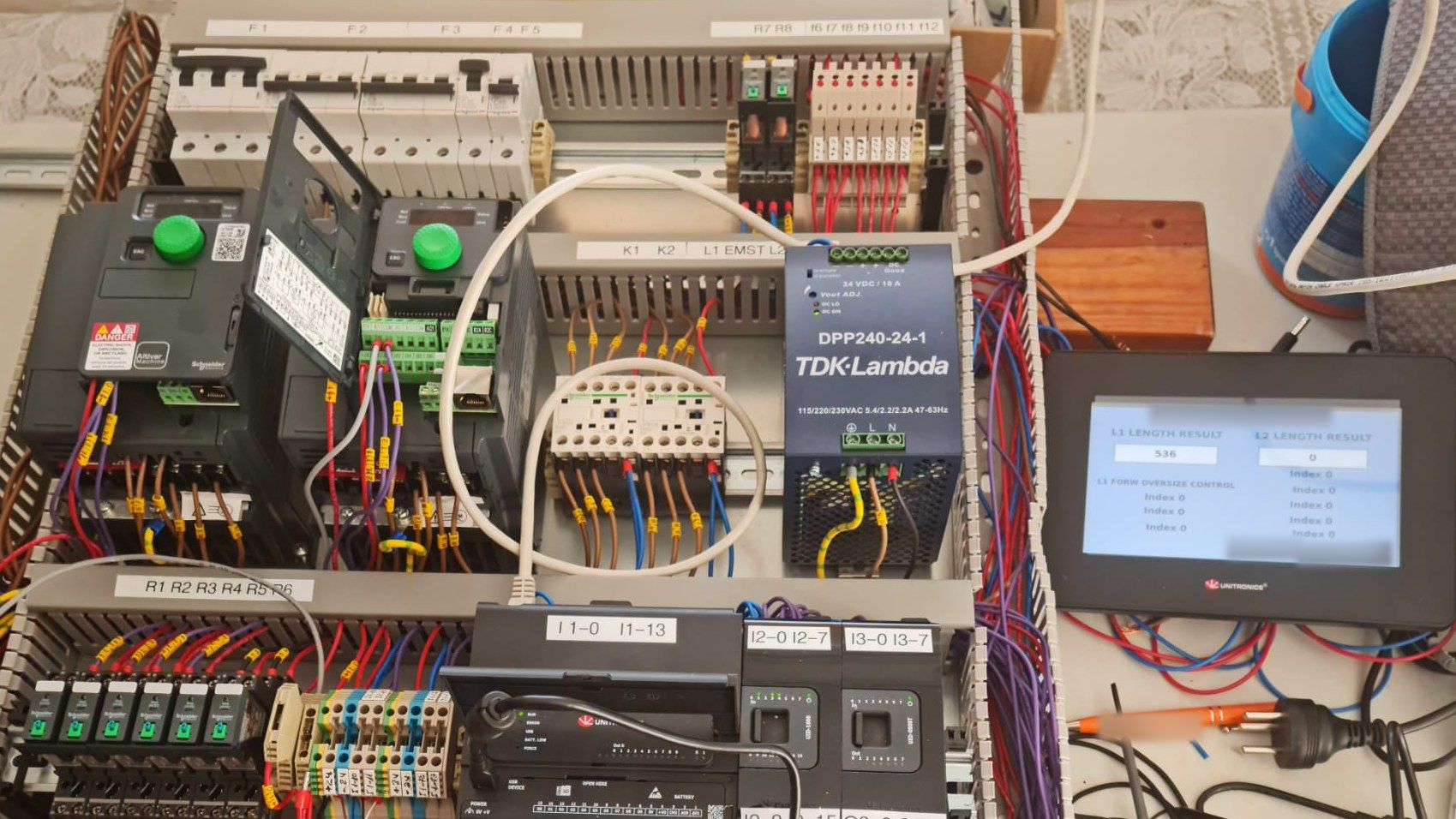
The same engineering works beyond products: we designed, assembled and delivered all the automation for a production line at an Israeli building-products manufacturer, from a control cabinet tested in our lab to installation and commissioning on site. See the full project
Development stages
What does a hardware startup need at each stage?
Four stages, each answering a different question: does the idea work, does it work for users, does it meet the requirements, and can it be built repeatably? We estimate each stage's duration after the initial evaluation.
01 · PoC
Proof of concept for investors
We test the core technical idea on dev boards and off-the-shelf modules, to show investors it works before money goes into a custom board.
Output: A working demo unit and a list of technical risks
Gate: You decide whether to move on to an engineering prototype
02 · EVT
Prototype for pilot users
The first custom board, firmware and enclosure working together, in a small run that's enough for pilot users. There's usually more than one revision.
Output: Working units, a bring-up report and a firmware build
Gate: The units work against the agreed requirements
03 · DVT
Validation and certification prep
Stress, environmental and pre-compliance tests on units close to the final product, then the documentation for the accredited lab.
Output: Test report, pre-compliance results and a technical file
Gate: Every open finding is fixed or accepted by you
04 · PVT
First batch
DFM changes, a small batch with a manufacturer and a production test procedure, to confirm every unit comes out the same.
Output: Manufacturing pack: Gerbers, BOM, assembly drawings, test procedure
Gate: The small batch passes the test procedure
Stages and gates
How do you avoid burning runway on a prototype?
Commit to one stage at a time, start with off-the-shelf parts, and design for certification from the first schematic.
In hardware product development for a startup, money usually burns in two places: revisions built before anyone knew what they had to test, and redesigns that surface late, at the lab or at the manufacturer. Three rules help avoid both:
- A gate at the end of every stage. Each stage ends with a deliverable and your decision, and you get a written proposal for the next stage only. You can stop, change direction or raise before the next spend.
- Off-the-shelf first. For the proof of concept, and sometimes the first revision too, dev boards and ready-made modules test the idea faster than a custom board. The custom board is designed once it's clear what it has to do.
- Design for certification from day one. Protection, grounding, filtering and component choices are settled in the first schematic. A fix after a failed lab test usually costs a full board revision.
Manufacturing
First batch: who manufactures it, and who tests it?
Boards, mechanical parts and cabling are made by manufacturers we work with, and a small batch can be checked in our lab before it reaches you.
Conceptech works with established manufacturers for PCB fabrication and assembly, mechanical parts and wire harnesses, from prototype to production, including local manufacturers in Israel for urgent and sensitive work. The manufacturer is chosen for the stage, the quantity and the product's requirements.
For small batches we can do incoming inspection, integration and testing in our lab, so production faults turn up with us rather than with you or your pilot users.
The full manufacturing pack, with Gerbers, BOM, assembly drawings and a test procedure, lets you move on to series production with your own manufacturer or one we choose together.
Founders abroad
Working with founders outside Israel
We work with founders and companies abroad through remote collaboration, with English-speaking engineering throughout the project. Partnerships with companies abroad are welcome too.
Calls, design reviews and file handover run remotely and in English, and so do reports and documentation. The stage gates work the same from anywhere: at the end of each stage you get the deliverable and a written proposal for the next one, and you decide whether to continue.
- NDA: we sign one on request when the project calls for it.
- IP and files: ownership is agreed in the contract for each project, before work starts.
- Your own team: if one discipline is missing, a specialist engineer joins your project and works inside your tools and processes.
Services
Which services fit a hardware startup?
01
Working hardware prototypes
Electronics, firmware and mechanics in one working unit, for an investor demo or a pilot with users.
02
PCB design
Schematic, component selection and layout, through to a file pack a manufacturer can build from.
03
Firmware and embedded development
Firmware for the product: drivers, communications and logic, written so it can be tested and maintained.
04
Certification readiness: CE, FCC and UL
Design decisions and pre-compliance checks ahead of CE, FCC and UL, so you reach the test lab prepared.
05
DFM and small-batch production
A DFM review, the manufacturing pack and work with manufacturers, with the small batch checked in our lab.
06
HIL rigs for firmware testing
A simulated world around the board, so firmware is tested automatically on every change before it reaches the field.
07
A test station for the first batch
A fixture, instruments and software that run the same test procedure on every unit and keep a result for each one.
Hardware development for startups: FAQ
Do you sign an NDA before we share our idea?
Yes. We sign an NDA on request when the project calls for it. In product development that's common, because the first conversations already involve an idea, sketches or code. Not every job needs one, and we check together whether yours does before we start.
Who owns the design files and the IP?
Ownership of design files, source code and IP is agreed in the contract for each project, before work starts. That way it's settled and documented before the first stage, and you can show it to investors when they ask.
We have a software or hardware team. Can you work alongside it?
Yes. When you have a team and one discipline is missing, such as PCB design, firmware or mechanics, a specialist engineer we bring in joins your project for a defined period and works inside your processes and tools. When several disciplines are missing, Conceptech takes on the whole hardware side and coordinates the interfaces with your team.
Can you build a prototype for an investor demo?
Yes, and that's usually the proof-of-concept stage for a hardware startup: a unit that shows the technical principle works, built on dev boards and off-the-shelf modules. A demo unit has to work reliably in front of investors; it doesn't have to pass certification. We design it so what you learn from it carries into the engineering prototype instead of being thrown away after the round.
What drives the cost of hardware development for a startup?
The cost depends on scope, so you get a written proposal for each stage separately rather than one figure for the whole development. The main drivers:
- The number and complexity of boards, and the number of revisions
- The scope of firmware, mechanics and enclosure
- Certification requirements and target markets
- The number of units for the pilot and the first batch
Scope and the duration of each stage are estimated after the initial evaluation.
Tell us what you're building, and we'll propose the first stage
Send a short description of the product, where you are today and what the next stage has to show, to investors or to users. An engineer will reply with an initial direction.
Usually a reply within 3 working hours, by email or phone